
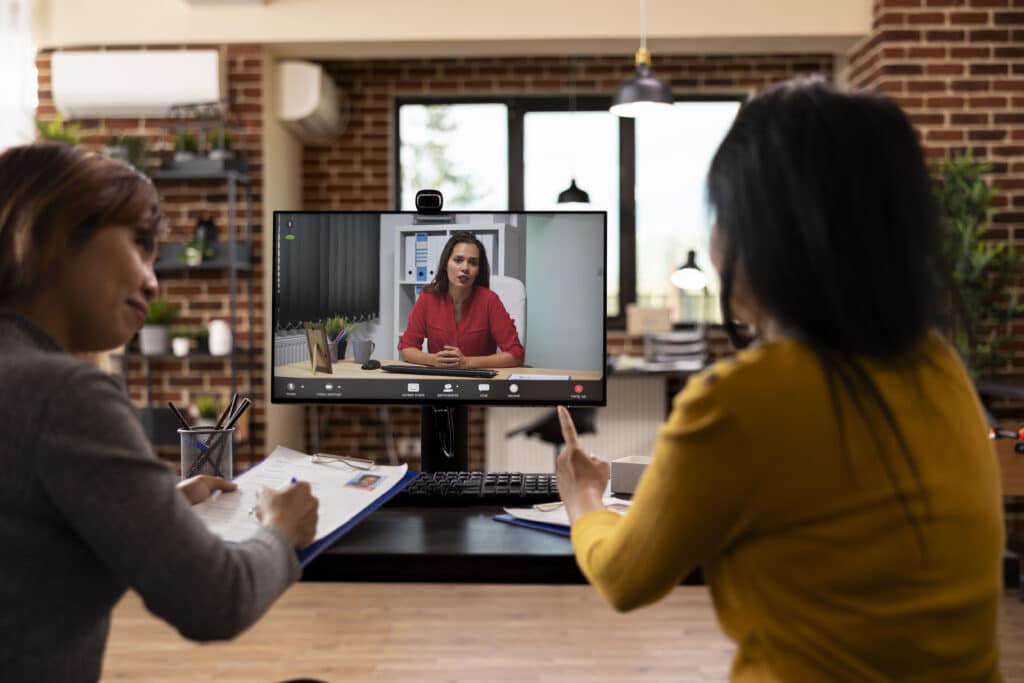
A witness is testifying from a home office in Chicago. Opposing counsel is dialing in from a hotel room in Dallas. Your court reporter is in Minneapolis. The deposition starts in ten minutes, and someone’s audio just cut out.
Virtual depositions have become a standard part of legal practice across Minnesota, Wisconsin, and the country. They save time, reduce travel costs, and make scheduling significantly more manageable. But when they go wrong, they go wrong fast, and the consequences show up in the transcript, the timeline, and sometimes the case itself.
These best practices for virtual depositions help attorneys, witnesses, and legal teams protect the integrity of the record from the first connection to the final certified transcript.
1. Choose a Court Reporting Firm Experienced in Virtual Depositions
Not every court reporting agency has the infrastructure or experience to run a smooth virtual deposition. This is the foundational decision that everything else builds on.
Look for a firm that offers:
- A secure, dedicated platform for remote proceedings (not just a standard consumer video call)
- Technical support available before and during the deposition
- Certified reporters experienced in managing remote audio and exhibit handling
- Hybrid reporting capability for proceedings where some participants attend in person
Affiliated Court Reporters has supported remote and hybrid depositions across Minnesota and Western Wisconsin for years, using a secure Zoom platform designed specifically for legal proceedings.
Our team manages technical troubleshooting, exhibit sharing, and real-time annotation, so attorneys can stay focused on the deposition itself rather than the technology running it.
2. Test Your Technology Before the Day of the Deposition
This step gets skipped more often than it should, and it is one of the most preventable sources of delay and disruption in virtual proceedings.
At least 24 hours before the scheduled deposition, confirm the following for every participant:
- Internet connection is stable and strong enough for video
- Camera is positioned at eye level with good lighting from the front
- Microphone produces clear audio without echo or background noise
- The video platform is installed, updated, and tested
- A backup device is available in case the primary fails
Witnesses in particular often need guidance here. Many are participating in a legal deposition for the first time and are unfamiliar with what a professional remote proceeding requires. A short pre-deposition tech check call can save significant time on the day and reduce anxiety for the witness.
3. Establish a Quiet, Professional Environment
Where each participant appears on camera matters. A cluttered background, a noisy environment, or poor lighting does not just look unprofessional; it can affect the quality of the audio record and create distractions during testimony.
Communicate these ground rules to all participants in advance:
- Choose a quiet room with a door that can be closed
- Silence all phones and notifications for the duration of the proceeding
- Use a plain or neutral background, or a professional virtual background if needed
- Ensure adequate lighting so the face is clearly visible on camera
- Avoid sitting with a window directly behind you, as backlighting obscures the face
For witnesses giving testimony from home, these details make a genuine difference in how the proceeding is perceived and recorded.
4. How to Manage Exhibits in a Virtual Deposition
Exhibit management is one of the areas where virtual depositions most frequently run into problems. Documents that would be handed across a table in an in-person setting need a coordinated digital workflow to be introduced, reviewed, and entered into the record cleanly.
Best practices for virtual exhibit handling include:
- Send pre-marked exhibits to all parties in advance when possible
- Use the screen sharing and annotation tools built into your deposition platform
- Confirm that the witness can see, scroll through, and review each exhibit before questioning begins
- Have the court reporter note each exhibit introduction clearly for the transcript record
- Keep a numbered exhibit log that all parties can reference throughout the proceeding
Affiliated Court Reporters supports real-time exhibit upload, presentation, and annotation during remote depositions, which allows exhibit handling to move as smoothly as it would in a conference room.
5. Set Ground Rules at the Start of the Record
Every virtual deposition should begin with a clear on-the-record statement that establishes the ground rules for the proceeding. This protects the integrity of the transcript and reduces the likelihood of disputes later.
A strong opening statement typically covers:
- Confirm everyone can see and hear clearly.
- No off-camera communication during the testimony.
- No unauthorized recording of the proceedings.
- Wait for questions to finish before answering.
- Agree on how to handle and record objections.
Taking three minutes to establish these rules at the start saves significant time and potential complications later in the proceeding.
6. How to Manage Technical Issues During a Virtual Deposition
Even well-prepared virtual depositions encounter technical issues. The difference between a minor delay and a derailed proceeding is having a plan ready before it is needed.
Discuss and agree on the following before the deposition begins:
- What is the protocol if a participant loses connection?
- How long will the proceeding wait before going off the record?
- What is the backup communication method if the platform fails?
- Who is the technical point of contact during the proceeding?
We provide technical support and troubleshooting throughout the deposition, which means attorneys have a dedicated resource to resolve issues without having to manage the technology themselves.
Why Minnesota and Wisconsin Attorneys Trust Affiliated Court Reporters
We have served attorneys across the Minneapolis-St. Paul metro area, greater Minnesota, and Western Wisconsin for decades. Our reporters are certified professionals with deep experience in remote and hybrid proceedings across every major practice area, from personal injury and medical malpractice to employment law, class actions, patent law, and family law.
We provide conference room access across the Twin Cities metro, including locations convenient to MSP International Airport, and our team is available for remote proceedings wherever the case takes them.
As Gloria J. Kittock of Watje and Moore, Ltd. noted after more than 20 years working with us: “We have found them to be consistently accurate and professional.” That kind of long-term trust is built one well-run deposition at a time.
Schedule Your Next Virtual Deposition With Confidence
Virtual depositions are not going away. For attorneys across Minnesota and Western Wisconsin, having a court reporting partner with the technology, the training, and the track record to handle remote proceedings seamlessly is not optional; it is essential.
Schedule your next virtual or hybrid deposition with our team and ensure your record is protected from the first connection to the final transcript.
Frequently Asked Questions
Is a virtual deposition transcript just as legally valid as an in-person one?
Yes. A certified transcript produced from a properly conducted virtual deposition carries the same legal weight as one produced in person. The key is working with a certified court reporter and a firm that follows proper remote deposition protocols.
What platform does Affiliated Court Reporters use for remote depositions?
We use a secure Zoom platform specifically configured for legal proceedings, with features for exhibit sharing, annotation, and real-time interaction. Technical support is available throughout the proceedings.
Can Affiliated handle a deposition where some participants are in person, and others are remote?
Yes. Our hybrid reporting service accommodates mixed participation, ensuring that remote participants have the same level of engagement and that the record captures all testimony regardless of where each party is located.
How far in advance should I schedule a virtual deposition?
As early as possible, particularly for complex multi-party proceedings. Affiliated makes scheduling straightforward and can accommodate last-minute requests when needed — a point several long-term clients have specifically noted as a strength of working with the team.